She and Her Cat and Her Story

Adulthood, family, and the purrpose-driven life.
shecat1

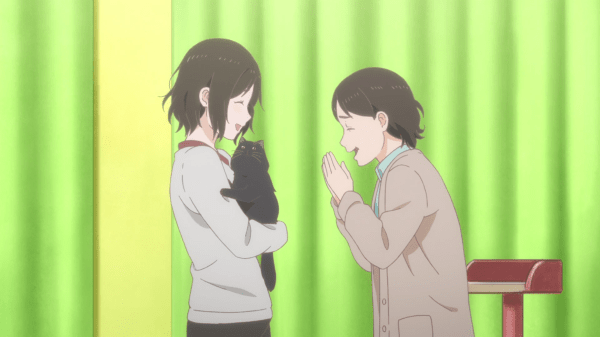
She and Her Cat -everything flows- is a four-episode short which aired this time last year and quietly earned the honor of being 2016’s Show That Turned Me Into a Puddle of Tears. It’s the story of a young woman (Miyu) struggling to make a place for herself in the working world outside of college, as told through the eyes of the cat who’s been with her since childhood. Graceful, charming, wrenching, and hopeful, She and Her Cat is an understated, emotional gem. 10/10, would let wreck me again.

It’s also a refreshing take on the traditional female coming-of-age tale, which so often focuses on heterosexual romance and the importance of a man to help the woman achieve happiness or fulfillment. Instead, Miyu’s story and struggles are related to her career and—more importantly—to her relationships with two women.

Click here for the full post on Anime Feminist!

[12 Days of AniFem] ClassicaLoid & the Girls’ Day Out

If you hear any noise, it ain’t the boys.

confessions

While I doubt I’ll have time to do the full 12 Days of Anime on my own here at JND, I am participating in the one being held over at Anime Feminist! Today I talk about one of my favorite episodes of the season: ClassicaLoid‘s silly, saucy, and joyfully inclusive “Girls’ Day Out.”

Click here for the full post on Anime Feminist!

The Nail That Sticks Up: Haikyu!! & the Power of Weirdos

Birds of a different feather flock together.

hiq8-11

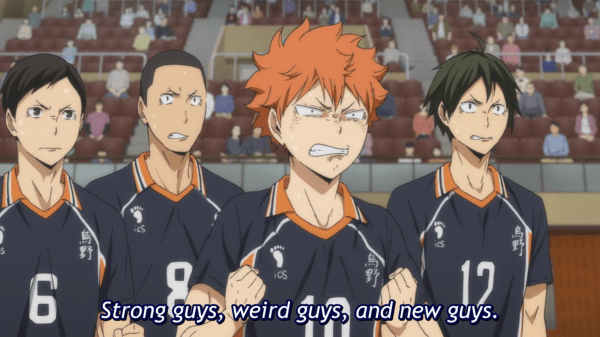
You may have heard the somewhat gloomy Japanese proverb: “The nail that sticks up gets hammered down.” It works a lot like the English idiom “don’t rock the boat,” and can read like a threat against individuality. While it often gets over-used by us folks in the west as a way to (negatively and reductively) explain Japan’s cultural tendency to value the group over the individual, it’s still a useful phrase because it neatly summarizes the major downside of collectivism: If you don’t fit the mold, then you’re no longer welcome.

Haikyu!! is a show about volleyball. It’s a show about persistence and passion. It’s a show about friendship and teamwork. And now, after finishing its third season, we can add something else to that list. Haikyu is a show about defending the nails that stick up.

Here there be spoilers: Discussion about the finale for Haikyu Season 3 (Karasuno Vs. Shiratorizawa) below the jump.

Continue reading

So That I Could Be Myself: Gender Performance in Showa Genroku Rakugo Shinju & Yuri on Ice

Finding a place for yourself, on stage and on ice.

yoi3-4

“It’s not a kind of rakugo I can do. The more I hear, the more uncomfortable I get… Never mind it. I have my own rakugo.”

“Trying to be the playboy isn’t me. I want to be the most beautiful woman in town, who seduces the playboy!”

This year we’ve had the pleasure of seeing a pair of top-notch anime, Showa Genroku Rakugo Shinju and Yuri!!! on Ice, deal with gendered expectations in two very different spheres: 1940s Japanese rakugo and modern-day world figure skating. Along the way, both series have challenged cultural expectations about how men should or shouldn’t act, and shown why it’s important to cast aside restrictive gender roles and play to our own strengths.

Click here to read the full article on Anime Feminist!

Magic-Kyun Renaissance and the Spark(le) of Creativity

The Magic of Art and other feel-good lessons from the best show nobody’s watching.

mkr1-3-52

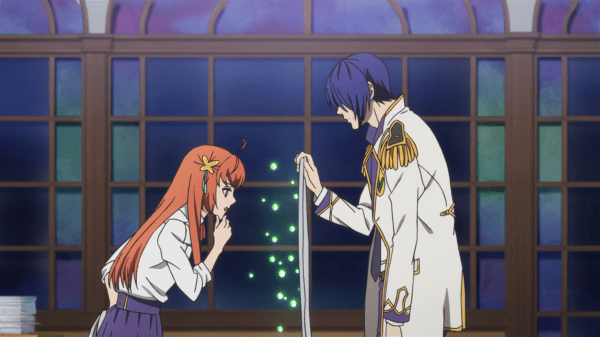
Magic-Kyun Renaissance is an adaptation of an otome game (basically a dating sim marketed towards girls) that follows Kohana, a second-year student transferring to the prestigious Hoshinomori School of Magical Arts. Once there, she quickly winds up on the school’s festival committee along with a bunch of cute boys specializing in various arts, from calligraphy to dancing to sculpting. Sparkles, flowers, and musical numbers ensue.

While the premise is pretty standard harem fare, it’s charmed me with its cast of likable (if not a bit one-note) art dorks, silly sense of humor and willingness to poke fun at itself, and some impressive cinematography thanks in large part to Yamazaki Mitsue’s direction and storyboards. I also find myself both fascinated and inspired by the way it uses its world of “magical arts” to address the struggles of young artists. And since no one else is talking about it, I figured now was a good time for a li’l mini-essay!

Here there be spoilers: General discussion of the first three episodes below.

Continue reading

Baccano! and the Art of Adaptation

From the page to the screen, Baccano! knows how to leave an impression.

baccano-carolread

Author’s note: This article was originally published on MAL. It has been reproduced here with minor edits.

Adaptin’ ain’t easy. That may be the most obvious sentence I’ve ever written, but it’s something we tend to forget when watching a favorite book or comic reimagined through TV or film. It isn’t just a matter of taking the original and adding motion, voices, and music; every element of the source material—from story arcs to character development to general tone and themes—has to be taken into account and converted to its new medium’s time restraints, structural limits, and narrative conventions.

So when I say the Baccano! anime is a stellar adaptation, I’m not saying it’s an exact replica or “better” than Ryohgo Narita’s original light novels. What I am saying is that it’s a prime example of how an anime can be faithful to the spirit of its source material while gleefully rearranging its pieces, preserving the original’s voice even as it adds its own to the chorus. When it comes to a great adaptation, sometimes what you change is just as important as what you keep.

General discussion of the Baccano! anime TV series and the first novel (1930: The Rolling Bootlegs) below. It helps if you’re familiar with the anime, but I’ll avoid any major spoilers.

Continue reading

How Cute High Earth Defense Club LOVE’s 2nd Season Struck Comedy Gold

Dumb chats, silly spats, and the absurdity of adolescence.

Boueibu 8 (4)

MyAnimeList hired me as a feature writer, and I promptly used my new power to write an essay-length article about magical boys. 13-Year-Old Me is giving Present-Day Me so many high-fives right now.

Click here for the full article on MAL!

Tanaka-kun is Always Listlessly Defying Appearances

Delinquency is only skin deep.

Screenshot (217)

Welcome to Part 3 (of probably 5?) in my ongoing Tanaka-kun mini-essay series! This time we’re taking a look at how the show uses its characters to contrast appearance with reality, mining humor and conflict out of social expectations and preconceptions. And, yup—as promised last week, this has to do with gender norms. Hey, I gotta stay true to my #brand, right?

I mentioned last time that social norms are a subtle, pervasive source of conflict in Tanaka-kun, and in some ways all of our main high school characters are dealing with the fact that they don’t quite fit into the tidy roles they think they should. There’s a constant push and pull between how a person sees themselves and how other people see them based on their appearances, and these assumptions are often tied to ideas about masculinity and femininity.

General discussion of events from Episodes 1-10 below the jump.

Continue reading

Tanaka-kun is Always Listlessly Growing Up

Taking the staircase elevator to adulthood.

Tanaka4 (22)

Part 2 (of ??) in my Tanaka-kun is Always Listless mini-essay series! This time I thought we’d veer away from specific cultural influences and talk about what the show does in terms of addressing adolescent concerns. ‘Cause what would this blog be without some good old-fashioned coming-of-age narrative chatter?

Given our high school setting, it’s not surprising that Tanaka-kun‘s cast spends a lot of time dealing with the bumpy transition from child- to adulthood. Sometimes this is about “grown-up” concerns like marriage or personal independence, but usually it’s more general than that, as characters struggle to find a balance between who they were/are, who the world thinks they should be, and who they want to be. In other words, it’s all about changes.

Detailed discussion of Episodes 2 & 4 and general references from the rest of the series below the jump.

Continue reading

Tanaka-kun is Always Listlessly In The Moment

Zen and the Art of Laziness?

Tanaka1 (10)

I’m trying something new this time around: A sequence of li’l essays about a single show viewed through different lenses. This is Part 1 (of ??) in a series on Tanaka-kun. And what easier, more accessible topic to start us off with than art, atmosphere, and historical/cultural influences? (She said, weeping onto her keyboard.)

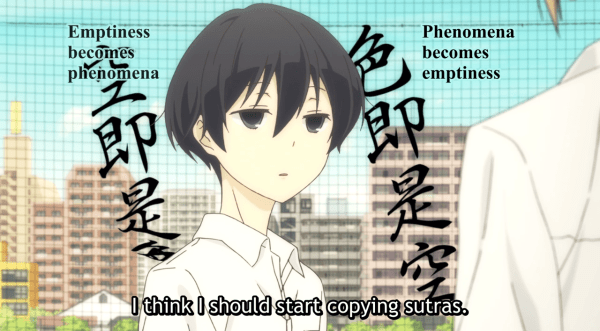
As the above screenshot playfully notes, Tanaka-kun (in addition to being a cute, clever, sleepy YA comedy) has a cheerful relationship with Zen Buddhism and the Taoist philosophy that influenced Zen. While I wouldn’t say the show is overtly religious, I do think there’s a Zen spirit that inhabits its humor, art design, stories, and themes, and I wanted to spend some time chatting about those connections.

Vague references to events from Episodes 1-6 below the jump.

Continue reading