Flip Flappers – Episode 10: “Pure Jitter”

Be careful what you wish for.

ff10-61

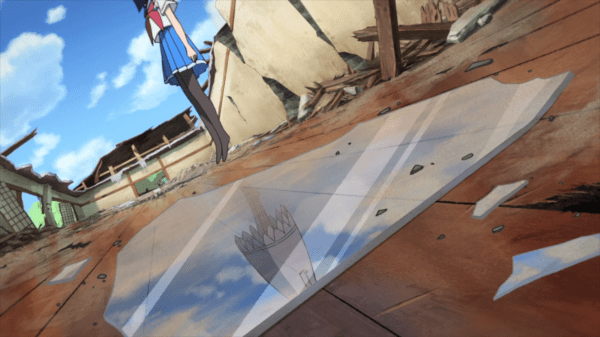
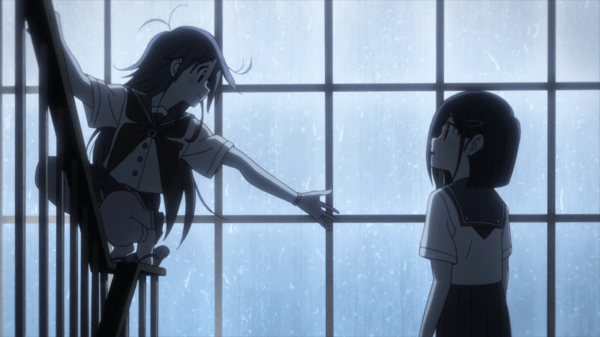
Our opposing organizations clash at last, but (as always) most of the real shakeups surround our protagonist. Cocona’s trust is shattered and her world turned upside-down thanks to a series of reveals that threaten not only the relationships she holds most dear, but her very sense of self. Not to mention Mom is being, like, a total control-freak. It’s hard out here for a teen, that’s for sure.

Click here for the full post on Anime Evo!

Flip Flappers – Episode 9: “Pure Mute”

The once and future partner?

ff9-28

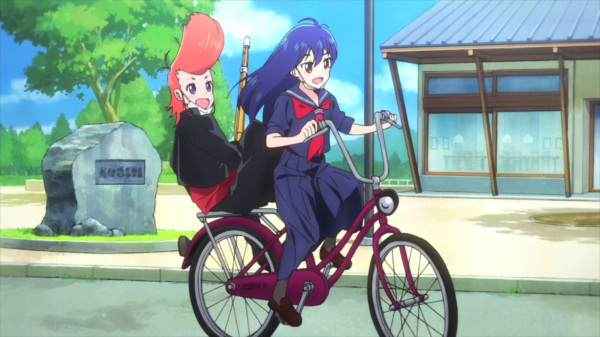
Cocona’s come a long way since we first met her. From a directionless girl looking to fill any role, even that of a villain (an amorphous child herself, in a sense), Cocona has slowly developed goals, ideals, and deepening relationships. She has a partner, she has a wish, she has resolve. Her most immediate internal conflicts have been tackled, so it makes sense that we’d turn our focus outwards again, to her relationships with others and her understanding of how they view her.

Click here for the full post on Anime Evo!

Flip Flappers – Episode 8: “Pure Breaker”

Robots in disguise.

ff8-15

Keeping with its fondness for classic coming-of-age genres (fairy tales, magical girls, yuri school stories, etc.), Flip Flappers goes all-in with giant robots this week. It’s something of a bridge episode in terms of story and character arcs, but the Tron-like city, swooping and smeared action sequences, looming monsters, and multiple mecha transformations easily make it the busiest and most visually exciting episode since “Pure XLR”‘s desert battles.

Click here for the full post on Anime Evo!

AniFem Roundtable: For the Love of Trash Characters

They’re bad. And that’s why they’re good.

girlish2-4

I took part in my first AniFem roundtable! This time the team talked trash characters, especially trash female characters–what defines ’em, why we love ’em, and how they can be sneakily subversive to gender norms.

Click here for the full conversation on Anime Feminist!

Flip Flappers – Episode 7: “Pure Component”

A Papika for all seasons.

ff7-31

As last episode’s final scenes suggested, Cocona and Papika’s actions in Pure Illusion are starting to affect the real world, and not necessarily in a good way. Fittingly, this is also the moment when the series itself shifts from a sequence of loosely connected, episodic adventures to a more fluid story, as “Pure Component” is all about dealing with the repercussions of what’s happened before and setting the stage for what’s coming next.

Click here for the full post on Anime Evo!

Panning the Stream: Fall 2016 Midseason Review

Peeking in on the autumn lineup.

classic6-4

I’m writing this from a hotel room in New York, which both explains why it’s a bit late (some of these shows have already moved past their halfway point) and why this introduction is going to be brief. My Fall anime bloc continues to either hold steady or improve each week, depending on the show, which is always a promising sign at the halfway mark. There’s good variety too, so whether you’re looking for something to soothe or something to pump you up, you should be able to find a much-needed break from reality below.

Continue reading

Flip Flappers – Episode 6: “Pure Play”

Walking a mile in senpai’s shoes.

ff6-26

Cocona and Papika’s journey through adolescence continues, although in a different direction from last week. It looks like Flip Flappers is developing a rhythm here, alternating between stories of awakening sexuality and stories of deepening understanding and empathy for others. And with a place as flexible as Pure Illusion, “seeing the world through someone else’s eyes” can be a whole lot more than just a metaphor.

Click here for the full post on Anime Evo!

So That I Could Be Myself: Gender Performance in Showa Genroku Rakugo Shinju & Yuri on Ice

Finding a place for yourself, on stage and on ice.

yoi3-4

“It’s not a kind of rakugo I can do. The more I hear, the more uncomfortable I get… Never mind it. I have my own rakugo.”

“Trying to be the playboy isn’t me. I want to be the most beautiful woman in town, who seduces the playboy!”

This year we’ve had the pleasure of seeing a pair of top-notch anime, Showa Genroku Rakugo Shinju and Yuri!!! on Ice, deal with gendered expectations in two very different spheres: 1940s Japanese rakugo and modern-day world figure skating. Along the way, both series have challenged cultural expectations about how men should or shouldn’t act, and shown why it’s important to cast aside restrictive gender roles and play to our own strengths.

Click here to read the full article on Anime Feminist!

Flip Flappers – Episode 5: “Pure Echo”

Yuri Cocona Arashi?

ff5-1

Cocona and Papika return to Pure Illusion only to find themselves smack-dab in the middle of a scary movie, trapped in an all-girls boarding school that repeats the same 24-hour loop each day. While the “Echo” in the title probably refers more to the way this school is a warped reflection of their own, the episode also strongly echoes Ikuhara’s Yurikuma Arashi, combining horror elements with “Class S” romance tropes to craft a genuinely creepy and undeniably queer adventure for our two explorers. Or, as a Twitter friend put it: The Gang Goes to Yuri Hell.

Click here for the full post on Anime Evo!

Magic-Kyun Renaissance and the Spark(le) of Creativity

The Magic of Art and other feel-good lessons from the best show nobody’s watching.
mkr1-3-52

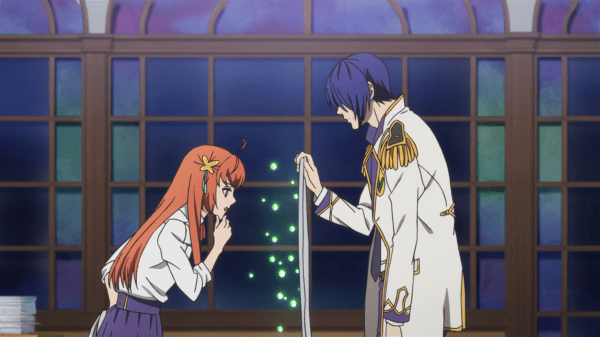
Magic-Kyun Renaissance is an adaptation of an otome game (basically a dating sim marketed towards girls) that follows Kohana, a second-year student transferring to the prestigious Hoshinomori School of Magical Arts. Once there, she quickly winds up on the school’s festival committee along with a bunch of cute boys specializing in various arts, from calligraphy to dancing to sculpting. Sparkles, flowers, and musical numbers ensue.

While the premise is pretty standard harem fare, it’s charmed me with its cast of likable (if not a bit one-note) art dorks, silly sense of humor and willingness to poke fun at itself, and some impressive cinematography thanks in large part to Yamazaki Mitsue’s direction and storyboards. I also find myself both fascinated and inspired by the way it uses its world of “magical arts” to address the struggles of young artists. And since no one else is talking about it, I figured now was a good time for a li’l mini-essay!

Here there be spoilers: General discussion of the first three episodes below.

Continue reading