Sailor Moon Newbie Reviews: Episodes 7-8

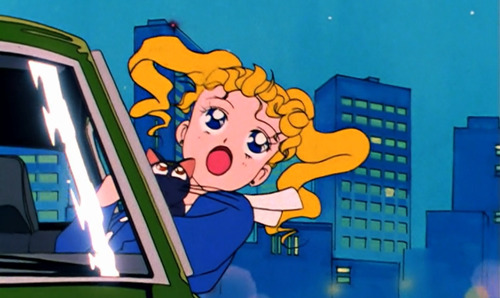
Luna caught her first water-type!
image

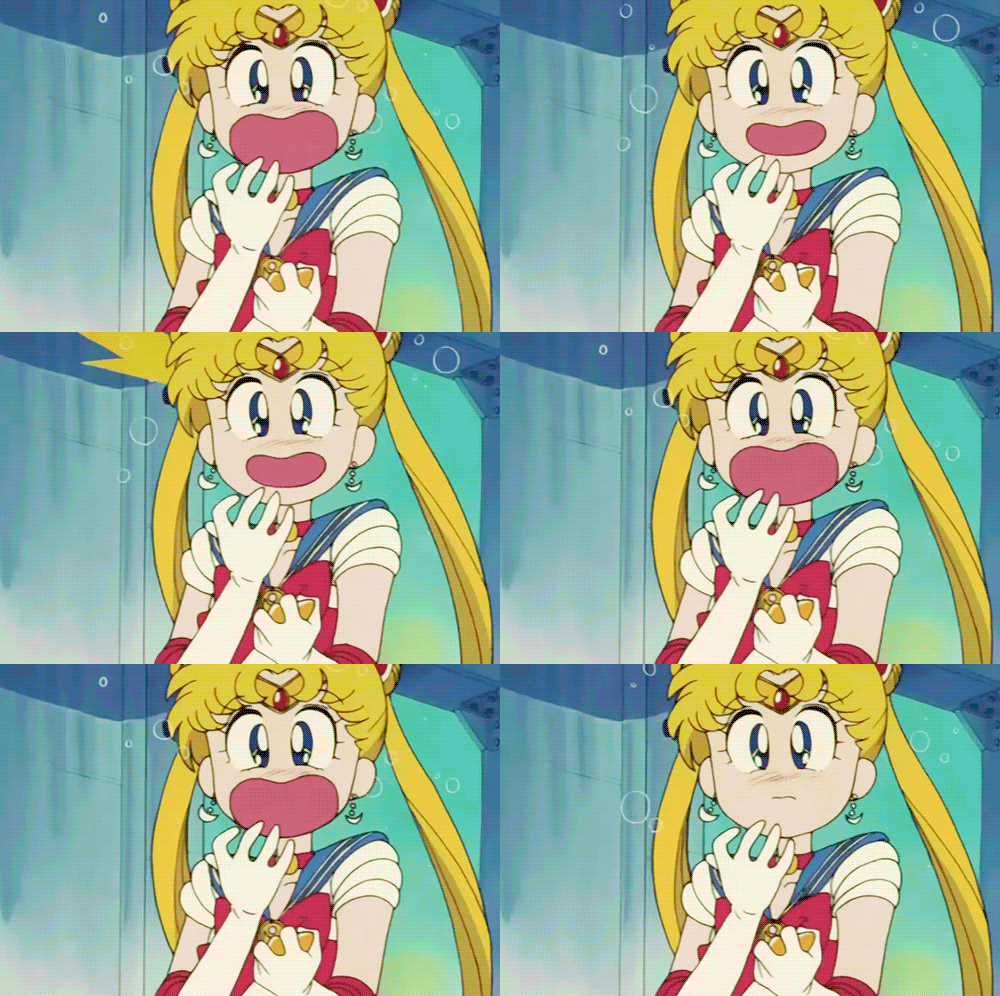
Like most origin stories, Sailor Moon is really a pair of tales: one is about the junior high student Tsukino Usagi, and the other is about the hero-in-training, Sailor Moon. Usagi hangs with her friends, struggles with her grades, and argues with her mom. Sailor Moon hangs with her magic cat, investigates mysteries, and works to resolve conflicts.

Both make a lot of mistakes, to be sure, but one is portrayed in a much more positive light than the other, and it’s no surprise that the Sailor Moon stories interest me more than the Usagi ones. So watching her spend an episode getting mad at her friends and Luna for not helping her become a STAR! is much less interesting than watching her help a jazz musician defeat a bat-lady.

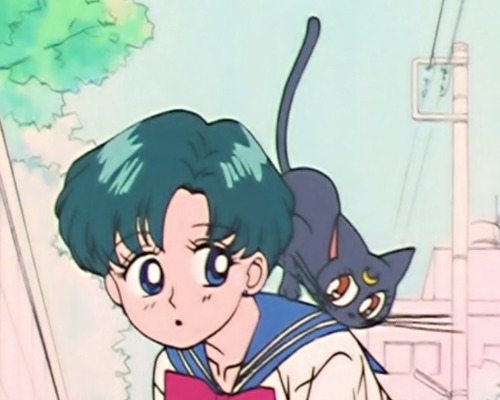
Fortunately, the creators must have sensed that the Usagi Show was flagging and picked this exact moment to bring in a new character.

But we’ll get to that in a minute.

Continue reading

The Sensei Next Door

I keep dropping this one when I talk about Sailor Moon, so it almost certainly deserves a longer explanation.

Shoujo [shoh-joh]
少女

noun.
(1) A girl or young woman, usually used on minors (“19 and under” in Japan).

(2) A genre of anime or manga that focuses on character emotions and interpersonal relationships (family, friends, etc.). They often feature a female protagonist and a romantic (sub)plot, though this isn’t always the case.

The themes and content tend to be geared towards a teen or preteen audience, with MCs that are usually 16-and-under, so there’s little in the way of “mature” content (i.e., it’s heavy on the hand-holding and light on the bow-chicka-wow-wow). If you find yourself watching a shoujo and suddenly characters be all up in each other’s area codes, then you’re probably watching a josei, which have a similar “character-driven” focus but are intended for slightly older audiences.

Beyond that, though, a shoujo can be about pretty much anything – they run the gamut from drama to comedy, slice of life to high fantasy – and they can have plenty of action or intrigue thrown in the mix, too (see: Escaflowne, Vision of, a “shojo” that took about 12 genres, tossed them in a blender, and made a damn fine smoothie out of ‘em).

To be honest, the dividing line between a shoujo and, say, a shounen (“boys”) or josei (you know that one already!) series can be a rather blurry one and, like most genres, is largely a matter of marketing strategies.

…Well, marketing strategies, AND the amount of bubbles, sparkles, and/or flowers the series can fit into a single soft-touched screenshot.

Never question a shoujo’s commitment to sparkle motion.

You May Have Heard Of…

  • Sailor Moon
  • Cardcaptor Sakura
  • Fushigi Yuugi: The Mysterious Play*
  • Revolutionary Girl Utena*
  • Escaflowne
  • Fruits Basket
  • Ouran High School Host Club

*These both venture into what I would call “older teen” territory as their stories progress, but they’re always categorized as shojo, and I did watch them both with I was in middle school and I don’t seem to be permanently scarred, so… *shrug* Like I said. Marketing.

Sailor Moon Newbie Reviews: Episodes 5-6

So we’re all in agreement that Luna is the best character on the show, right?

image

I’ve been trying to take notes while watching, and I swear 50% of my bullet points this week were some variation of “Luna is such a Boss.” She’s focused, sharp, cool-headed, quick on her tiny cat feet, and has some of the best expressions in the series, managing to look both catlike and human at the same time.

For Usagi, Luna is the voice of reason in a world of pleasant but ineffective adults. And for Sailor Moon, Luna is the coach, shouting instructions from the sidelines and teaching our young protagonist How To Hero. (“Quit relying on others!” Luna cries when Usagi looks around, waiting for Tuxedo Mask to help her. Like. A. Boss.). Luna makes Usagi just plain better, and we can already see that progress in these two episodes.

Continue reading

Sailor Moon Newbie Reviews: Episodes 1-4 (Meet ‘n’ Greet)

Moon Prism Power, Make Up!

image

So I know episodes 5-6 came out yesterday, but this post is just for last week’s batch (1-4). It turns out that trying to launch a blog while moving to a new state isn’t nearly as easy as it sounds, so I’m behind. I’m hoping to have a post for episodes 5-6 later this week, and then I’ll be able to blog the new episodes as Viz (re)releases them on Mondays.

Also, this was a hefty chunk of episodes including the pilot (henceforth known as “meet ‘n’ greet” posts), so it’s on the lengthy side. Future posts should be much shorter.

And now, on with the show!

Continue reading

The Sensei Next Door

Anime [ah-knee-may]
アニメ
noun.
Japanese Animation. The term technically began its life as the English word “animation,” which Walt Disney Studios probably copyrighted around the time they were making Donald Duck cartoon war propaganda.1

When the Japanese were making their own cartoon war propaganda,2 they needed a way to describe the process, so they borrowed the word “animation” from us in the same way we borrowed the word “karaoke” from them, which is to say it was butchered almost beyond recognition (much like the act of karaoke itself, actually). It was later shortened to “anime” and used as a blanket term to describe all animated projects.

Eventually English speakers picked up the term, this time using it to refer specifically to Japanese animation. These days the linguistic lines are growing fuzzy again, as American animators are beginning to create works influenced by the Japanese animation style (such as the excellent Avatar series), and fans can’t agree on whether this counts as “anime” or not. One of these days someone will probably come up with a new term to describe this sub(-sub?)-genre, and a whole new group of nerds will be created and subsequently mocked. And thus the circle of life continues.

1 YouTube: “In Der Fuhrer’s Face.”

2 YouTube: “Evil Mickey attacks Japan.” What, you think I could make this shit up?

The Sensei Next Door

Sensei [sen-say]
先生
noun.
Teacher, master, or doctor.

“The Sensei Next Door” is looking to be a recurring segment where I give you a brief (and slightly silly) explanation of a term or concept. Eventually I suspect I’ll start including tiny history and culture lessons. (The fun kind, I swear. The kind where you get to put on plays about the French Revolution and build Roman cities out of food.) For now, though, I’ll just focus on vocab.

Whenever I catch myself using (or wanting to use) some “otaku jargon,” I’ll post a little explanation of it. Of course, if you stumble across a term somewhere and want to know more about it, feel free to Ask me, too. Anime 101, as promised!

And now that I’ve used the word otaku, I guess I’d better explain it:

Otaku [oh-tah-koo]
オタク
noun.
In America, this term has come to refer (rather positively) to someone with a love of Japanese animation (anime) and comics (manga). 

In Japan, it refers (rather less positively) to That Guy living in a poorly-lit room at his parents’ house, playing erotic video games and painting figurines of cat girls.

As my apartment is free of parents, erotic video games, and cat girl figurines (three for three!), I use the American definition to refer to myself, but not the Japanese one. I’ll do the same here at JND, using “otaku” as a friendly shorthand to describe anime and manga fans. Feel free to do the same.

(And if you really want to paint a cat girl figurine while you’re at it, well, that’s fine, too. ^^ )