The Summer of Saiunkoku continues, this time in article form!

Once upon a time, a poor little girl named Hong Shurei did not dream of marrying a prince. Instead, Shurei saw the struggles of the people around her and dreamed of becoming a civil servant—an impossible dream, for women were banned from public office. Yet when the law changed to allow her entry, Shurei soon learned her dream was not without its nightmares, for deep-seated prejudices loomed everywhere she looked, and these were not the sort of monsters one could draw a sword and slay.
Despite its fantastical shoujo setting, The Story of Saiunkoku is no traditional fairy tale, and Shurei’s journey is much closer to unjust reality than escapist fiction. This allows the series to explore systemic oppression, workplace harassment, and the importance of structural support, especially in systems that claim to be merit-based. Through its young, marginalized civil servants, Saiunkoku provides an intersectional critique of the “bootstrap” mentality, highlighting how oppression creates hurdles that often require more than just “hard work” to clear.
Cllick here for the full article on Anime Feminist!
If you like the dishes AniFem is serving up, please consider subscribing to our Ko-Fi or Patreon for as little as $1 a month!


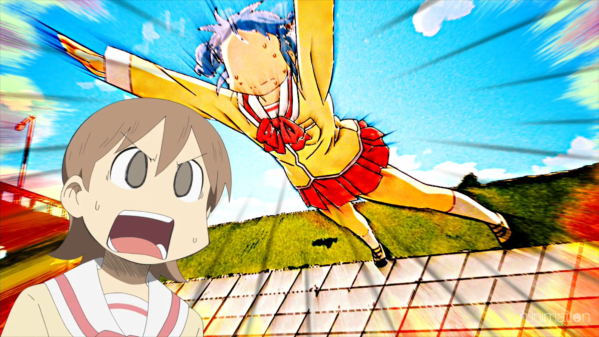 Adapted from the manga by Keiichi Arawi and vibrantly animated by Kyoto Animation, this comedy featuring robots, talking cats, and murderous deer initially sounds far from “ordinary.” However, Nichijou‘s dedication to finding reality through absurdity—to showing how things feel rather than how they literally are—grants the series an authenticity that many grounded YA dramas struggle to capture.
More to the point, it accomplishes this with a cast largely composed of high school girls—in particular, the central crew of Yuuko, Mio, Mai, and Nano. Through these girls’ diverse personalities and adventures, Nichijou not only showcases many common (and not-so-common) trials and triumphs of modern female adolescence and friendship, but also expands the narrow idea of what it means to be a “normal” teen girl in fiction.
Adapted from the manga by Keiichi Arawi and vibrantly animated by Kyoto Animation, this comedy featuring robots, talking cats, and murderous deer initially sounds far from “ordinary.” However, Nichijou‘s dedication to finding reality through absurdity—to showing how things feel rather than how they literally are—grants the series an authenticity that many grounded YA dramas struggle to capture.
More to the point, it accomplishes this with a cast largely composed of high school girls—in particular, the central crew of Yuuko, Mio, Mai, and Nano. Through these girls’ diverse personalities and adventures, Nichijou not only showcases many common (and not-so-common) trials and triumphs of modern female adolescence and friendship, but also expands the narrow idea of what it means to be a “normal” teen girl in fiction.


 The Josei Next Door